
A home cook's handbook
Sous vide, explained with the safety numbers that matter.
Sous Vide Help is a plain-language guide to cooking sealed food in a temperature-controlled water bath. It explains how the method works and how to set it up, and it takes every temperature and time from US government food-safety guidance. It does not sell equipment, recommend brands or invent cooking times.
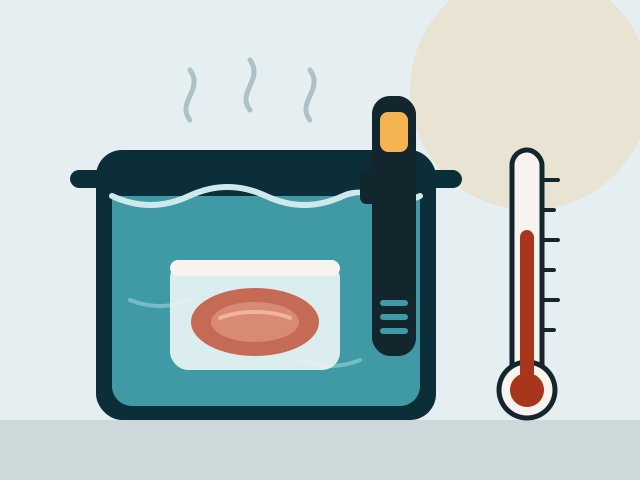
- Prepare and sealClean hands, clean surfaces, food sealed in a bag made for cooking.
- Heat in the bathThe water is held at a set temperature while the food comes up to it.
- Check with a thermometerDoneness is a preference; the safe minimum temperature is not.
- Serve, or chill fastEat it now, or cool it quickly and store it cold for a limited time.
The guides
Six short guides, in the order a first cook needs them
Each guide stands on its own, but together they follow one cook from setup to leftovers. Every guide lists the government documents it is based on and the date it was last reviewed against them.
-
How sous vide cooking works
Sealed food, a controlled water bath, and why time and temperature work together.
-
Equipment and setup for a home water bath
Heater, container, bags and thermometers, and a clean start.
-
Food safety and the danger zone
The 40°F to 140°F range, sealed bags and the people most at risk.
-
Cooking temperatures and doneness are different questions
Safety temperatures, doneness preferences and why colour misleads.
-
Chilling, storing and reheating sous vide food
Cooling fast, storage times, freezing and reheating to 165°F.
-
Bags and plastics: what is known and what is not
Food-contact rules, sealing, leaks and the limits of what is known.
How this handbook is written
If a government source does not say it, neither do we
Low-temperature cooking is full of confident claims about how long food can sit at a given temperature. Many of those claims cannot be checked against any public guidance written for home cooks. This handbook takes the narrower path: it states the figures that US food-safety agencies publish, names the document each one comes from, and explains the principle instead of giving a number wherever the guidance is silent.
- Government sources onlyEvery temperature and time comes from the USDA Food Safety and Inspection Service or the FDA. FoodSafety.gov and the CDC are cited for background, such as who is most at risk. Each page lists its sources.
- No invented timesThe handbook does not publish low-temperature pasteurisation times, because the consumer guidance it relies on does not set them out.
- No brands, nothing for saleIt is not affiliated with any appliance maker and carries no advertising, affiliate links or product recommendations.
Reference
The numbers, in one place
- 145°Fwhole cuts of beef, pork, veal and lamb, then a 3 minute rest
- 165°Fall poultry, and reheated leftovers
- 40°F to 140°Fthe danger zone, where bacteria grow fastest
The safety table collects every temperature and time used on this site, with the Celsius conversion and the government document each figure comes from.