
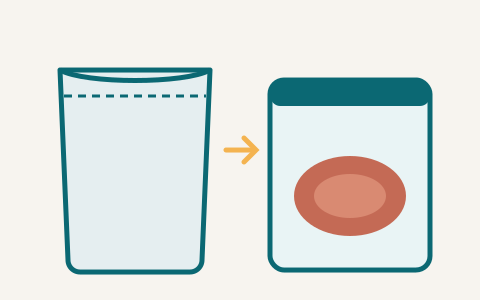
What the bag is for
The bag does three jobs. It keeps water away from the food, so flavour and juices stay where they are. It keeps the food in close contact with the warm water, so heat reaches it evenly. And, if it is sealed well, it keeps the food separate from the bath, so the water and container do not become another surface for raw juices to reach.
Because the bag sits in hot water for the whole cook and touches the food the entire time, people reasonably ask what it is made of and whether that matters. This guide sets out what the cited government sources say, and is plain about what they do not.
How food-contact materials are regulated
In the United States, the Food and Drug Administration regulates substances that come into contact with food, including the materials used in food packaging and food-storage products. The FDA's information for consumers explains that these food-contact substances are reviewed for safety for their intended use.
The phrase "intended use" is the important part for sous vide. A material is assessed for the way it is meant to be used, which can include the kind of food it touches and the temperatures it meets. A bag designed for storing sandwiches in a refrigerator and a bag designed for cooking in hot water are different products, even if they look alike. The safe assumption is that a product's intended use is the one its maker describes on the packaging.
The practical rule
Use bags whose maker says they are suitable for cooking or heating food, at the temperature you plan to use, and follow the maker's instructions. If the packaging says nothing about cooking or heating, do not assume it is suitable.
Choosing a bag without brand names
This handbook does not name, test or recommend products. Instead, here are the questions to ask of any bag, and where the answers come from.
- Is it made for food? The packaging should describe it as a food bag or food-storage product.
- Is it made for heat? Look for a statement that it can be used for cooking, simmering or heating, and for any maximum temperature or time the maker gives.
- Is it made for your sealing method? Bags for vacuum sealers are usually sold for use with those machines. Zip-top bags are sealed by hand.
- Is it intact? Check for holes, weak seams or damage before filling, and especially after any sharp bones or edges have been inside.
Whether bags can be washed and reused is a question for the bag's maker. The government sources cited here do not address it. If you do reuse a bag, never reuse one that has held raw meat, poultry or seafood for food that will not be cooked again, in line with the FoodSafety.gov advice to keep raw food and its juices away from ready-to-eat food.
Sealing: vacuum and water displacement
There are two common ways to seal food for a water bath.
Vacuum sealing
A vacuum sealer draws the air out of a bag and closes it with a heat seal. The result is tight contact between bag and food, which helps heat transfer and keeps the bag from floating. Follow the sealer maker's instructions, keep the open end of the bag clean and dry so the seal forms properly, and check the seal before the bag goes in the water.
Water displacement
With a zip-top bag, a cook can push most of the air out by lowering the open bag slowly into a container of water, letting the water pressure press the air out through the opening, and then closing the zip just above the waterline. It is a technique, not a safety step, and the bag still needs to be one its maker describes as suitable for heating.
Whichever method you use, wash your hands before and after handling raw food, as FoodSafety.gov advises, and keep raw juices away from the outside of the bag and the opening.
Low oxygen is a safety issue, not just a technique
Removing air from a bag does more than improve contact with the water. It creates a low-oxygen space around the food. The CDC explains that Clostridium botulinum and related bacteria make spores that can, under certain conditions, grow and produce botulinum toxin, and that a low-oxygen or no-oxygen environment is one of those conditions. Low acid, low sugar, low salt, a certain temperature range and a certain amount of water are the others it lists.
That is why the FDA Food Code, for food businesses, treats sous vide as a form of reduced oxygen packaging and requires controls such as strict refrigeration and limits on storage time. For home cooks the lesson is the same as in the storage guide: a sealed bag of cooked food is not shelf-stable. Eat it promptly or chill it fast, keep it at 40°F or below, and observe the refrigerator time limits. A sealed bag of raw food is no different: keep it cold, and do not treat the vacuum as a preservative.
Leaks, floating and cross-contamination
Bags sometimes fail. A seal can open, a sharp edge can puncture the plastic, or a bag can float to the surface because air or steam has collected inside it.
- A floating bag is partly out of the water, so part of the food is not being heated at the bath temperature. Weigh it down, clip it to the side so the food stays submerged, or reseal it with less air.
- A leaking bag lets bath water reach the food and lets raw juices into the water. If raw food leaks into the bath, treat the water, the container and anything else in the bath as having been in contact with raw food: clean the container and tools afterwards, as the clean and separate steps from FoodSafety.gov call for.
- Damage after cooking matters too. A bag that tears while cooling in ice water lets that water in; handle and store the food accordingly.
In every case, the safety check is unchanged: the centre of the food should reach its safe minimum internal temperature, confirmed with a thermometer, before it is eaten.
What this guide does not claim
Questions about chemicals moving from plastics into food are often asked about sous vide, and answers online range from reassuring to alarming. This handbook does not attempt to settle them. It does not state that any particular plastic or additive is safe or unsafe, does not quote amounts or limits, and does not repeat claims about specific materials. The cited FDA material establishes only that food-contact substances are regulated and reviewed for their intended use, and the practical step that follows from it is the one above: use bags their maker describes as suitable for cooking, at the temperatures you use, as directed.
If you want to avoid plastic in contact with hot food altogether, that is a personal choice the guidance cited here neither requires nor rules out. Readers with specific health concerns should take them to a qualified health professional.
That is the last guide. Keep the time and temperature safety table to hand.